More guidance on how to identify and pursue your New Year Resolutions in 2026:
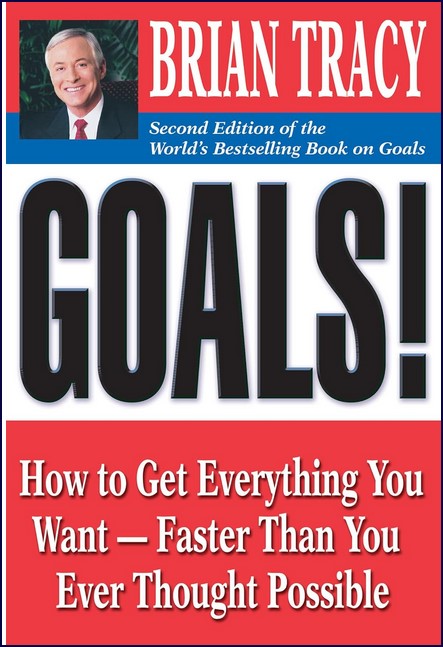
How to Change Your Life: Brian Tracy’s Approach
By Jim Byrne, Doctor of Counselling
~~~
Summary
Dr Jim Byrne, Doctor of Counselling, Hebden Bridge and Worldwide
This blog post explores how to identify and pursue effective New Year’s resolutions for 2026, drawing on the teachings of Brian Tracy.
The introduction, written by Dr Jim Byrne, highlights the importance of clarity and commitment in personal change. It recommends reflecting on the key areas of life – such as
career, finances,
health, relationships,
spirituality and daily happiness – before setting clear, specific, and measurable goals for meaningful transformation.
~~~
Introduction
Personal change begins with clarity and commitment. Brian Tracy teaches that the first step toward meaningful transformation is to decide exactly what you want. Take time to reflect on your life and identify the key areas that matter most to you—whether it’s advancing your career, increasing your financial stability, improving your health, nurturing relationships, deepening your spirituality, or simply experiencing more joy day to day. Be specific, and write down your goals in clear, measurable terms.
Once you’ve defined your targets, Tracy recommends asking yourself four powerful questions:
~~~
Focus Questions:
Here are some those helpful questions, in my own words:
(1). What obstacles are holding me back right now?
(a). Identify the beliefs, habits, or external barriers standing in your way. Tracy emphasizes that awareness is the first step toward overcoming resistance and taking control of your future.
(2). What will my life look like in six months or a year if I don’t make these changes?
(a). Visualize the consequences of inaction. Tracy suggests that honestly assessing the cost of staying the same can be a strong motivator for change.
(3). How will I feel if nothing changes?
(a). Acknowledge your emotions – whether it’s frustration, disappointment, or regret. Tracy encourages you to use those feelings as fuel to propel you forward, rather than letting them hold you back.
(4). How motivated am I to make this change now?
(a), Tap into your desire for a better future. According to Tracy, motivation increases when you connect your goals to your deepest values and visualize the benefits of success.
~~~
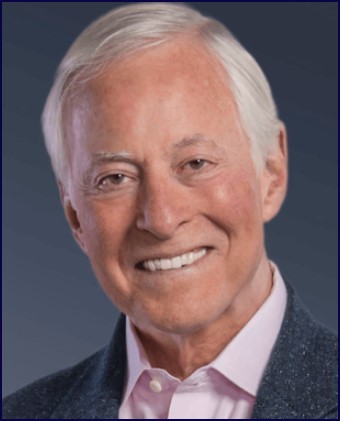
Brian Tracy often says, “Your life only gets better when you get better.”
Take responsibility for your results and commit to ongoing learning and personal growth.
Break big goals into actionable steps, develop new skills, and track your progress regularly.
Remember, change is not a single event but a continuous process of improvement.
By applying these principles, you’ll build momentum, overcome challenges, and create the life you truly want.
~~~
That’s the end of my third blog post on New Year resolutions.
There may be one or two more.
Best wishes for a better year in 2026, and take care.
Postscript: The example of your health goals…for 2026
If your goal for 2026 is to improve your health, start by clearly defining what “better health” means for you. For example, you might decide to aim for a daily walk, a balanced diet, or regular sleep and rest. Be as specific and measurable as possible.
Next, take a moment to identify what’s been holding you back in the past. Are there habits, such as skipping breakfast or spending too much time sitting, that you want to change?
Or are there beliefs like “I’ll never stick to an exercise routine” that need to be challenged?
Bringing these obstacles into the open is the first step toward overcoming them and setting yourself up for success in the new year.
How to Create and Implement Your Most Important Resolution for 2026
Applying the Six Thinking Hats and Six Action Shoes to Your Health Goals
By Jim Byrne, Doctor of Counselling
~~~
Summary
This blog post explores effective strategies for creating and implementing meaningful New Year’s resolutions in 2026, particularly focusing on health-related goals (as an illustration of the recommended process).
Drawing on the Six Thinking Hats and Six Action Shoes frameworks, the author, Jim Byrne, offers practical insights to help readers elevate their self-development journey.
The approach encourages structured reflection and action, supporting individuals in turning their resolutions into lasting, positive changes.
~~~
Introduction
On the 8th of January, I wrote a blog post with the following title: Thoughts related to New Year Resolutions:
The quest for wisdom and self-development is like the creation of a forest floor…in some respects…
Today, I want to move up a gear.
~~~
The Problem
I want to address the problem of why most people struggle to set and pursue and achieve their New Year Resolutions, and more general goals.
The two main problems that I have identified, which block people from achieving their goals, are as follows:
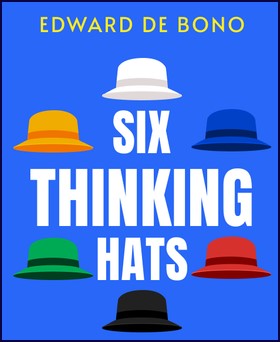
(1). Most people do not know how to “think” effectively. (Dr Edward de Bono argued that this is because most people try to do Six different elements of “thinking” at the same time, which is ineffective.)
(2). And most people are “contemplators”, who think and plan, but do not take action. (James Prochaska and his colleagues argue that the states of change are as follows: Pre-contemplation; Contemplation; Determination; Action; and Maintenance of changed behaviour. You have to know two things: Which stage in this process are you at? And what do you need to do to move to the next stage?)
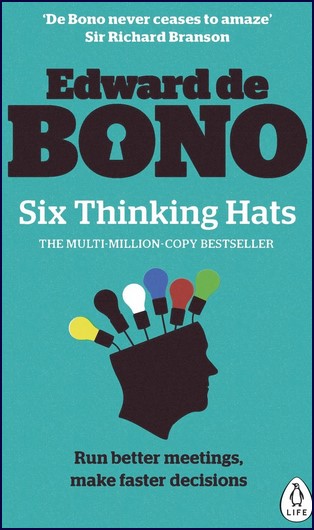
In this blog post, I will attempt to help individuals who struggle to achieve their goals to make definite progress this year: by using two of Dr de Bono’s strategies. One to improve your “thinking”; and one to improve your management of action.
For convenience, and simplicity, I will use the example of focusing on improving your health; but in practice, you can use the guidance in this blog post to create New Year Goals – or year-round goals – in any area of your life!
~~~
~~~
Background and context
As we settle into the new year, many of us are eager to set resolutions that will truly make a difference. But how do you determine which resolution should take priority?
For most people, health stands out as the foundation upon which everything else – wealth, happiness, relationships – depends.
Without good health, all other ambitions are put at risk. (Or, as Jim Rohn says: “If the car breaks down, the journey ends!”)
In this blog post, I want to guide you through a practical, structured approach to selecting and achieving your most important resolution for 2026 – using Edward de Bono’s two powerful models:
the Six Thinking Hats
and the Six Action Shoes.
~~~
Step 1: Thoughtful Resolution Creation Using the Six Thinking Hats
Before you commit to a health goal, take time to explore it from multiple perspectives. De Bono’s Six Thinking Hats model encourages you to examine the issue in a full spectrum of ways. As a quick introduction to this model of “thinking”, we can say that De Bono’s six elements of the thinking process are as follows: Collecting information (which he calls “White Hat Thinking”.)
Let me briefly introduce the Six Thinking Hats model: Imagine you put on a white hat, and get a white sheet of paper, and begin to write down the information that you need to collect; the information you already have; the sources of information that you might need to tap into, etc.
You might then take off your White Hat and put on your Yellow Hat. Imagine the yellow sun shining down on your Yellow Hat (as a reminder that the yellow hat is for looking at the positive aspects of the material or question under review.
On the basis of this brief introduction, let us now proceed to look at creating your New Year Resolution to improve your health:
White Hat (Facts & Information): Ask yourself, “What do I know about my current health? What facts or data do I have – recent check-ups, fitness levels, sleep patterns, stress markers?” Gather all the relevant information before you decide.
Yellow Hat (Optimism): Focus on the benefits. How could improving your health enhance other areas of your life? Picture the positive outcomes – more energy, a longer life, greater happiness.
Red Hat (Feelings): Tune in to your emotions about your health. Are you feeling anxious, hopeful, frustrated, or determined? Emotional awareness can help you identify what truly matters most and what you’re ready to change. (Under the Red Hat, you should also consider your own values, and the values of your nearest and dearest, if they are affected!)
Green Hat (Creativity): Brainstorm creative ways to reach your health goal. What new approaches could you try – different exercise routines, dietary changes, relaxation techniques?
Blue Hat (Process): Step back and organize your thinking. What’s the overall plan? How will you structure your journey and keep track of your progress? (Sometimes it’s best to begin with the Blue Hat, rather than the White!)
Black Hat (Caution): Consider the risks or challenges. What obstacles might stand in your way- habits, time pressures, lack of motivation? Be honest about what could go wrong, so you can plan accordingly. (I normally use the Black Hat in final position, because it is the hat that cautions, “Look before you leap! Could this go wrong?”)
Take notes as you work through each “hat,” and use your insights to define a health resolution that feels both meaningful and achievable.
~~~
Step 2: Planning Your Action Phase with the Six Action Shoes
Once you’ve clarified your health goal, it’s time to move from thinking to doing.
Edward de Bono’s Six Action Shoes model can help you craft a concrete plan for implementation. Each “shoe” represents a different style of action, as shown next. (The procedure is this: Imagine your are putting on one of the six types of shoes shown below. Then ask yourself: ”Given the ‘shoes’ that I am wearing, what action should I take regarding my resolution or goal?”)
Grey Sneakers: Investigative, exploratory action – useful for learning about new health strategies, trying out different workouts, or gathering more information by “moving around”.
Purple Riding Boots: Authoritative, leadership actions – taking charge; taking responsibility; setting boundaries; or advocating for your own health needs.
Navy Formal Shoes: Structured, disciplined action – ideal for sticking to a specific exercise or medication routine.
Brown Brogues: Practical, everyday actions – small, consistent steps like drinking more water, walking daily, or improving sleep hygiene.
Pink Slippers: Caring, nurturing actions – self-care practices such as relaxation, meditation, or gentle movement.
Orange Wellington (Gum) Boots: Emergency or urgent action – responding quickly if a health issue arises or correcting course when needed.
~~~
Identify which “shoes” are most relevant for your health goal. Imagine you put on a sequence of relevant shoes; and outline specific actions you’ll take in each style.
~~~
The coloured hats and shoes are mnemonics to remind you of the various elements of thinking and acting; and they are “attention directors”, keeping you focusing on one “thinking task”, or “action task”, at a time!
~~~
Putting It All Together
By combining thoughtful reflection (Six Thinking Hats) with practical action (Six Action Shoes), you’ll be well-equipped to create and carry out a resolution that truly matters. Remember: resolving to prioritize your health is the first step; but turning that decision into daily, meaningful action is what brings real transformation. (Moving from Contemplation to Determination to Action!)
As you embark on your journey, keep reviewing and adjusting your approach. Celebrate small wins, learn from setbacks, and stay committed to your vision of a healthier, happier you in 2026.
Your future self will thank you!
Wishing you clarity, courage, and steady progress on your resolutions this year.
The quest for wisdom and self-development is like the creation of a forest floor…in some respects…
By Jim Byrne, Doctor of Counselling
~~~
Blog Post Summary
In his blog post dated January 8, 2026, Dr Jim Byrne reflects on personal development and the pursuit of wisdom, emphasizing the interconnectedness of daily experiences and enlightenment. He presents the concept that one’s future is shaped not merely by today’s thoughts, but by cumulative experiences and actions. Drawing parallels between the formation of a forest floor and character development, he argues for the significance of proactive change and self-education. Encouraging readers to blend intention with action, he stresses that understanding alone is not enough; intelligent action is essential for meaningful transformation. He concludes with wishes for a successful New Year; and some notes of guidance on how best to create and pursue your reslutions for 2026.
~~~
Introduction
Do you want to know my latest insight into the journey of personal development? If yes, please read on…
I am a seeker after wisdom; not because I think wisdom will bring me a lot of money – though I also want a significant amount of money – (if I can get it morally!)
I don’t actually know why I am a seeker after wisdom. It was not something which I chose. It seems to be something that chose me, when I was about fourteen years old, and I discovered the second-hand book stalls outside the bookshops on Aston Quary, and Bachelors Walk, in central Dublin, when I was a first-year metal jewellery apprentice.
But my quest for wisdom has led me into and through Zen Buddhism, moderate Stoicism, and various systems of counselling, psychology, psychotherapy, philosophy, and self-help processes.
~~~
My latest insight into how to build a better tomorrow
My latest insight into the journey of personal development arose in a slightly obscure, and bizarre manner, two mornings ago. Indulge me if you will:
I awoke after a good night’s sleep. But before I could get out of bed, to go to the bathroom, I had this profoundly certain insight: “Nirvana is Samsara”!
Readers who are familiar with Buddhist philosophy will know what that means. But how can I translate it for people from more traditional European or American backgrounds?
Essentially, this phrase suggests that the ordinary world of daily experience (Samsara), with its ups and downs, is not separate from enlightenment (Nirvana); rather, they are two sides of the same coin. For those raised with more Western philosophies, it might be akin to recognising that fulfilment and meaning are not found in escaping life’s messiness, but in fully engaging with it, embracing both its joys and its challenges. In other words, the path to growth isn’t about running away from difficulties, but learning to see them as integral to our journey.
I had read this phrase several times in the writings of authors like Alan Watts (The Way of Zen) and Shunryu Suzuki (Zen Mind, Beginners’ Mind).
But as I lay there in bed, it occurred to me that this was no longer a phrase; a saying; or an intellectual understanding. It had become what Christmas Humphries has called “an intuition”. I could feel it “in the marrow of my bones”!
~~~
How could that have happened? How could I have changed so fundamentally?
Where did this “intuitive conviction” have come from? The only explanation I could come up with was this: The process of meditating, about five nights every week, for decades, has somehow crystalized; combined with all the Zen and related readings that Renata and I have done, night after night, year after year.
The concept of “sedimentation” drifted into my mind; and then the sense of how a forest floor may be formed, by year after year of “sedimentation” of foliage.
In ecological terms, this process is more commonly referred to as “leaf litter accumulation” or “organic matter deposition”, but “sedimentation” is sometimes used metaphorically to convey the layering and slow build-up of material. While “sedimentation” traditionally refers to the settling of particles in water (like soil or sand in a riverbed), I am using it here poetically to describe the layered formation of forest floors, which should be understandable and evocative, especially in the context of personal growth and the gradual accumulation of insights.
~~~
The “sedimentation” (or “laying down”) of character and personality
My next thought was this: Personality and character formation are like a sedimented forest floor, laid down by years and years of deposition and accumulation. But in the case of a person, the deposition and accumulation are not organic matter, but rather “cumulative, interpretive experiences”, and the results of all of our actions in the world, including our perceiving-feeling-thinking.
My next thought was this: The author of the Dhammapada got it wrong by claiming that “Your life of tomorrow is determined by your THINKING of today!” (And this error of reasoning has become the foundation of rational therapy and cognitive behavioural therapy!)
~~~
There is more to life-determination than thinking
I was now very clear that my life of tomorrow will be determined by all of my cumulative, interpretive experiences; my actions in the world, including my perceiving-feeling-thinking processes and responses to stimuli (- plus the objective environment that I encounter tomorrow; and how I manage my lifestyle between now and tomorrow!)
And if I want to improve my life of tomorrow, I have to take “improving action” today. (This was a hugely significant insight because I have had more than fifty clients, over the past ten years, who think, but will not take NEW actions. Because they, like all humans, are creatures of habit, they keep repeating the same old habitual behaviours which have created their difficult lives of today, and because they will not change their behaviour today, they are going to keep getting the same old difficult life tomorrow!)
(The sedimented forest floor of the individual human is their body-brain-mind, and not just their mind. And the way this metaphor breaks down is this. The forest is a completely automatic process, while a human being has a theoretical access to personal change! In theory, we can each change the habits that build up the forest floor of failing lives! But in practice…!)
This is not a new idea. It overlaps the NLP idea that, “If you continue to do what you have always done, then the result you will get is the result that you always have got in the past, and the present!”
If my intuition added anything to that insight, then it is this: “If you want a better tomorrow, you need to change some significant aspect of your habitual behaviour today!”
If you can!
~~~
One step forward, two steps back…
I was pleased with my progress. My quest for wisdom was proceeding apace. And it had sedimented down in the marrow of my bones! (And my brain-mind/nervous system/and-musculature!) My “forest floor”!
~~~
So I went to the bathroom.
~~~
Back in the bedroom, I got back into bed to do my morning Progressive Muscle Relaxation (PMR) exercises:
Then: No!
Aristotle!!!!
~~~
The Nicomachean Ethics of Aristotle
But Aristotle had argued that our character formation (and he did not exclude personality) is a result of our childhood training!
But if my character is a product of my childhood training, then it is not affected by the cumulative, interpretive experience of my adult life! It is not a forest floor laid down throughout my adult life!
I was crest-fallen.
So I did my PMR. Then I did my William H. Bates eye exercises… (More later! Another day!)
~~~
Pushing ahead, with determination
Dr Moshe Feldenkrais had some interesting things to say about “embodied wisdom”
Then I remembered Moshe Feldenkrais. In one of his main books, Feldenkrais argues that everything we do is conditioned to some degree by three major factors: our heritage (which presumably means genes and early environment); our education; and our self-education.
This perspective offered a glimmer of hope. Unlike Aristotle’s rather fixed view, Feldenkrais suggested that through conscious awareness and deliberate action, we can actively participate in reshaping our habits and responses, even well into adulthood. It was reassuring to think that self-education could provide a pathway towards genuine change, regardless of earlier influences.
And then I remembered that I had been a member of the International Foundation for Action Learning for a few years, about twenty years ago. And the fundamental proposition of the IFAL is this:
“There can be no learning without action, and no action without learning”!
And this gets translated into a simple model which is expressed in this equation:
And we can translate the IFAL’s Questioning insight into Moshe Feldenkrais’s “Self education”!
~~~
Self-education as the road to a better future
And that is where today’s action comes in. What self-educating action can I take today to move me towards the kind of future that I would like to live tomorrow; and tomorrow?
And what kind of self-educating action can you, dear reader, take today, in order to create a better tomorrow for yourself?
(Of course, it is also important to remember Werner Erhardt’s slogan: “Understanding is the booby prize!” It took me many years to figure out why understanding is the booby prize. Then the penny dropped: Understanding is the booby prize because, without some intelligent action, based on a new understanding, that new understanding is relatively useless! It takes intelligent action to turn a new understanding into a new reality!
I leave you with that thought!
And I wish you a wonderful New Year for 2026. (Knowing that it will only happen if your work for it!)
And if you want to post an answer below, please feel free. It might provide more leaf mould for my sedimentation process! 🙂
Dr Jim Byrne, Doctor of Counselling, Hebden Bridge and Worldwide
That’s all for now.
Best wishes, happy new year, and take very good care of yourself!
Postscript: How to Make Best Use of Your New Year Resolution(s) for 2026
As you step into 2026 with fresh resolutions, remember that lasting change comes from blending intention with consistent, thoughtful action. Start by clarifying why your resolution matters to you—connect it to something meaningful in your life. Break your goal down into small, manageable steps, and celebrate progress at every stage, not just the end result.
Make a habit of reflecting on your actions and adjusting your approach as needed.
Don’t be discouraged by setbacks; instead, treat them as opportunities for learning and growth. Surround yourself with supportive people who encourage your journey. And most importantly, focus on forming new habits rather than relying solely on willpower—true transformation comes from persistent, mindful practice.
May your resolutions this year become seeds for growth, fulfillment, and well-being. Wishing you every success!

 Personal change begins with clarity and commitment. Brian Tracy teaches that the first step toward meaningful transformation is to decide exactly what you want. Take time to reflect on your life and identify the key areas that matter most to you—whether it’s advancing your career, increasing your financial stability, improving your health, nurturing relationships, deepening your spirituality, or simply experiencing more joy day to day. Be specific, and write down your goals in clear, measurable terms.
 Brian Tracy often says, “Your life only gets better when you get better.”
 That’s the end of my third blog post on New Year resolutions.
 This blog post explores effective strategies for creating and implementing meaningful New Year’s resolutions in 2026, particularly focusing on health-related goals (as an illustration of the recommended process).
 I want to address the problem of why most people struggle to set and pursue and achieve their New Year Resolutions, and more general goals.
 In this blog post, I will attempt to help individuals who struggle to achieve their goals to make definite progress this year: by using two of Dr de Bono’s strategies. One to improve your “thinking”; and one to improve your management of action.
 As we settle into the new year, many of us are eager to set resolutions that will truly make a difference. But how do you determine which resolution should take priority?
 Before you commit to a health goal, take time to explore it from multiple perspectives. De Bono’s Six Thinking Hats model encourages you to examine the issue in a full spectrum of ways. As a quick introduction to this model of “thinking”, we can say that De Bono’s six elements of the thinking process are as follows: Collecting information (which he calls “White Hat Thinking”.)
 What facts or data do I have – recent check-ups, fitness levels, sleep patterns, stress markers?” Gather all the relevant information before you decide.
 Blue Hat (Process): Step back and organize your thinking. What’s the overall plan? How will you structure your journey and keep track of your progress? (Sometimes it’s best to begin with the Blue Hat, rather than the White!)
 Grey Sneakers: Investigative, exploratory action – useful for learning about new health strategies, trying out different workouts, or gathering more information by “moving around”.
 Wishing you clarity, courage, and steady progress on your resolutions this year.

 In his blog post dated January 8, 2026, Dr Jim Byrne reflects on personal development and the pursuit of wisdom, emphasizing the interconnectedness of daily experiences and enlightenment. He presents the concept that one’s future is shaped not merely by today’s thoughts, but by cumulative experiences and actions. Drawing parallels between the formation of a forest floor and character development, he argues for the significance of proactive change and self-education. Encouraging readers to blend intention with action, he stresses that understanding alone is not enough; intelligent action is essential for meaningful transformation. He concludes with wishes for a successful New Year; and some notes of guidance on how best to create and pursue your reslutions for 2026.
 Do you want to know my latest insight into the journey of personal development? If yes, please read on…
 My latest insight into the journey of personal development arose in a slightly obscure, and bizarre manner, two mornings ago. Indulge me if you will:
 Where did this “intuitive conviction” have come from? The only explanation I could come up with was this: The process of meditating, about five nights every week, for decades, has somehow crystalized; combined with all the Zen and related readings that Renata and I have done, night after night, year after year.
 My next thought was this: Personality and character formation are like a sedimented forest floor, laid down by years and years of deposition and accumulation. But in the case of a person, the deposition and accumulation are not organic matter, but rather “cumulative, interpretive experiences”, and the results of all of our actions in the world, including our perceiving-feeling-thinking.
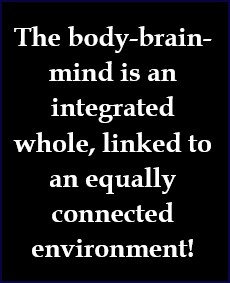 I was now very clear that my life of tomorrow will be determined by all of my cumulative, interpretive experiences; my actions in the world, including my perceiving-feeling-thinking processes and responses to stimuli (- plus the objective environment that I encounter tomorrow; and how I manage my lifestyle between now and tomorrow!)
 This is not a new idea. It overlaps the NLP idea that, “If you continue to do what you have always done, then the result you will get is the result that you always have got in the past, and the present!”
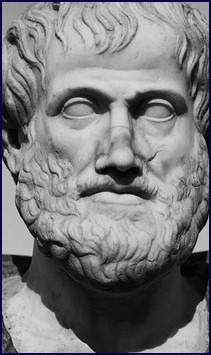 But Aristotle had argued that our character formation (and he did not exclude personality) is a result of our childhood training!
 And then I remembered that I had been a member of the International Foundation for Action Learning for a few years, about twenty years ago. And the fundamental proposition of the IFAL is this:
 And that is where today’s action comes in. What self-educating action can I take today to move me towards the kind of future that I would like to live tomorrow; and tomorrow?
 Don’t be discouraged by setbacks; instead, treat them as opportunities for learning and growth. Surround yourself with supportive people who encourage your journey. And most importantly, focus on forming new habits rather than relying solely on willpower—true transformation comes from persistent, mindful practice.
 ABC Counselling and Psychotherapy, Hebden Bridge