~~~
Montaigne modified my attitude towards The Analects of Confucius
By Jim Byrne, Doctor of Counselling, Hebden Bridge,
HX7 8HJ, UK
~~~
Psychology – Philosophy – Wisdom – Reflective thinking – Dedication to reality – Guide to the Good Life – Human potential
~~~
Tuesday 26th December 2023
Introduction
 Yesterday, on page 2 of THE PAGE, I was writing about whether or not it was possible to identify a single guiding principle, which we could teach to our children, and which would also serve as a point of guidance for the whole of our adult lives. In particular, I considered whether we might find such a principle in the writings of Lao Tzu and Confucius.
But then I could not find my copy of The Analects of Confucius. (And so I proposed that, today, I would look at the works of the Buddha, to see if he might have just one principle, which would stand alone, as the only principle we need to guide us through a Good Life which is both moral and enjoyable.)
~~~
Renata could find a needle in a haystack!
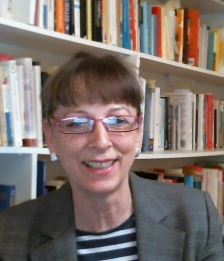 About 4.00pm, Renata came up to my office, and we went through the hundreds of books on our shelves together, looking for The Analects.
Just before Renata found it – (like a reliable bloodhound – or ‘heat-seeking bookworm’) – I stumbled over, or into, a book about the life of Montaigne. This is Sarah Bakewell’s How to Live: Or A life of Montaigne in one question and twenty attempts at an answer. (Vintage Books, 2011).
As I flicked through this book, waiting for Renata to “come up with the (Confucius) goods”, I stumbled over an idea that knocked my project into a different groove. For the distinction was made between
 “How to Live”
and
“How we should live”.
The second question – how we should live – is a moral question, (and it could be answered by the statement, “Follow the Golden Rule”!)
But the first question – (how to live) – is a practical question, and is not so easy to answer.
So now my project has become this:
 Is it possible to identify one ideal practical rule for a successful/balanced human life; and one essential moral rule for a socially responsible, good human life.
And as that idea burst through my mind, it seemed to be much better than my previous agenda.
Why?
Because the Golden Rule, or whatever moral rule we eventually settle upon, will have the essential effect of protecting other individuals – and groups (and animals, and nature) – from being harmed by us!
But it says nothing about protecting ourselves from being harmed by other individuals – or groups, or animals, or nature. (This requirement, to take care of ourselves, is most often covered by the concept of “prudence” as opposed to our “duty” to others. [RF Atkinson, Conduct: An introduction of moral philosophy; Macmillan, 1969.])
So, by teaching a fundamental rule of No Harm to Others; and No (Avoidable) Harm to Ourselves; we are producing a balanced strategy for a Good Life. (Or so it seems to me!)
But in the process, I have doubled the difficulty of my enquiry. I will have to work at least twice as hard as before, in the context of being Time Poor!
And, on that note, of being Time Poor, I must watch the clock.
In front of me, on my desk, I now have The Analects of Confucius, which I bought about 15 years ago. (The great virtue of building one’s own library – or rather of building a shared library with my wonderful bookworm wife [Renata], is that you can buy a book when you desire it, and put your hand – her “her hand” – on it when you require it!) I also have Atkinson’s Conduct. Plus Zen: A Personal Journal, which defines the eight core principles of Buddhist philosophy – (The Eightfold Path) – which might help us to come up with a single moral principle to guide our lives.
I have marked the sections in The Analects which I want to reflect upon, and comment upon; but I will have to leave that work until tomorrow.
I also now have in front of me the book by Sarah Bakewell, in which she explores 20 of Montaigne’s attempted answers to the question of how to live.
And, also during the time it took Renata to find the Analects, I stumbled across James Miller’s book, The Philosophical Life: Twelve Great Thinkers and the Search for Wisdom, from Socrates to Nietzsche.
That book by Miller – combined with Montaigne – may help me to identify one single principle of prudence which we can set alongside our one single moral principle, which we will teach to our children, and use as our own guiding light on the journey through life.
So, tomorrow, I hope to be able to present my findings about the guiding principles laid down by Confucius – (who is also called Master Kong!) Then I will move on to the Buddha, before turning westwards towards ancient Athens, Plato, Socrates, Aristotle, and so on.
So far, I seem to be leaning towards the Golden Rule as my guiding principle for a moral life; and some form of self-defence (like “personal boundaries”) as my principle of prudence.
When I was about fourteen years old, I was rootling through a penny book tray, outside Gibbs Bookstore, on Aston Quay, Dublin, when I came across a book of quotations. One of them said, “Cast thy bread upon the waters, for it shall return after many days”. (From the Book of Common Prayer). I found that idea appealing, but how to do it? Another of those quotations was from F.D. Roosevelt, and it said,
 “Wear a light smile, and carry a heavy stick!”
I thought that expressed a profound degree of prudence.
Smile at the world, and try to get along with everybody. But do not forget the Bad Wolf is (almost) everywhere! (Including inside yourself!) Defend yourself! (Without harming others!)
~~~
That’s all for today.
To be continued when I get my workload under some kind of reasonable control!!!… I plan to continue with an investigation into The Analects of Confucius…
Best wishes,
Jim
Doctor of Counselling
ABC Counselling and Psychotherapy
~~~

 ABC Counselling and Psychotherapy, Hebden Bridge