Taoism, Gestalt, and Confucian morality

Blog Post – 29th November 2026

~~~

Trust in the Organism? Why Society Is More Powerful than Our Genes or Innate Urges (Part 1)

By Jim Byrne, Doctor of Counselling and Life Improvement Mentor

The Life Improvement Mentoring Consultancy

Hebden Bridge and Worldwide

29th November 2026

~~~

Summary
Dr Jim is a highly experienced lifestyle mentor
Dr Jim Byrne, Zen Buddhist and moderate Stoic

In yesterday’s post on The Tao of Gestalt, I listed “trust in the organism” as a point of contact between Taoism and my E-Cent approach. On reflection, that phrase is a two-edged sword. If it is taken to mean that we can trust our spontaneous impulses regardless of our socialisation, it ignores the fact that each of us carries a Bad Wolf as well as a Good Wolf. In this first of two posts, I draw on Chapter 1 of my book, Who Are You, and Where Are You Going?, to argue that the human individual is a social product, and that society is more powerful than our genes or innate urges. In Part 2, I will look at what that means for helping people to recover from childhood distortions.

~~~

Introduction
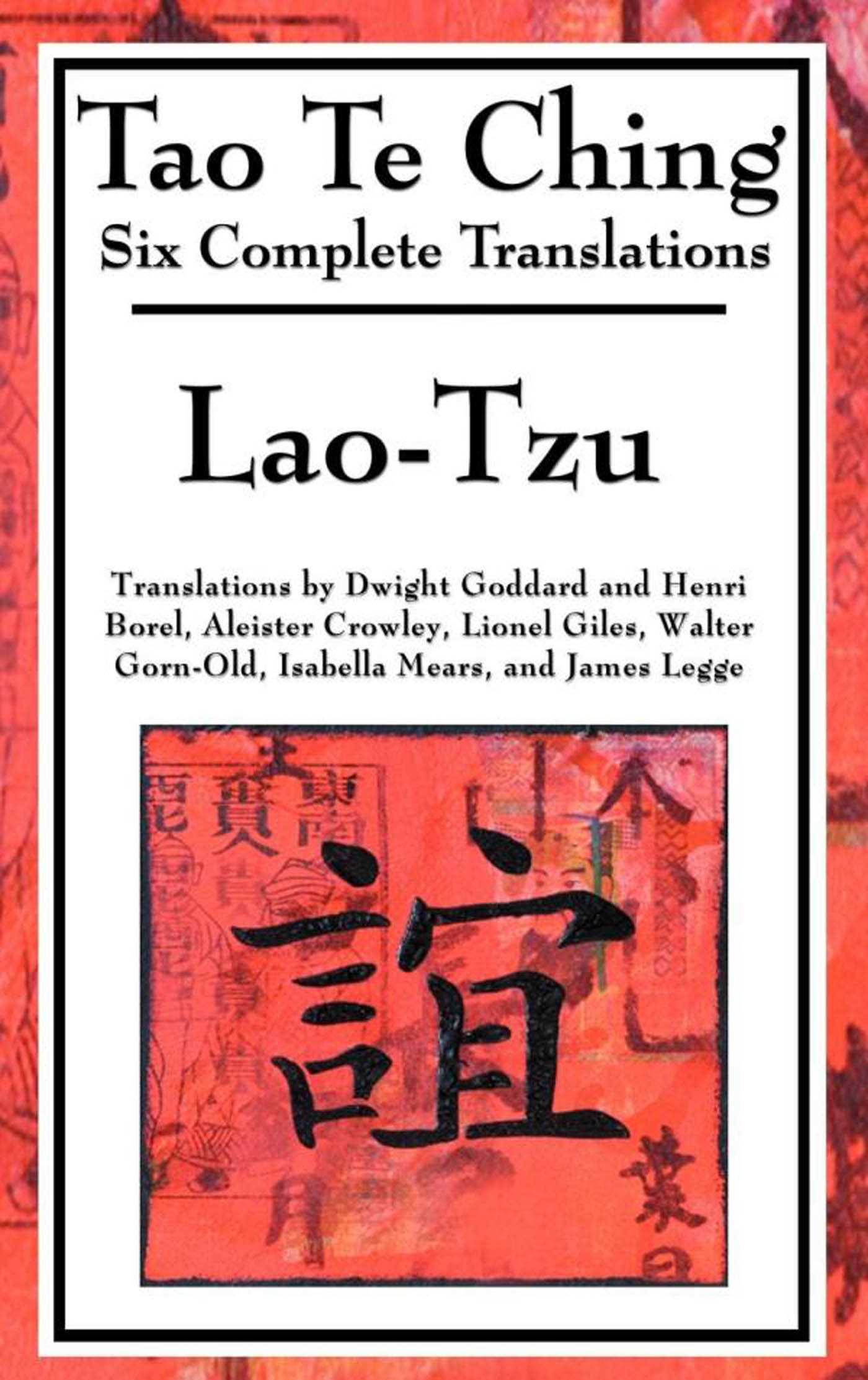
Yesterday I wrote that the Taoist faith in natural wisdom echoes my conviction that emotional experience carries information that we ignore at our peril. I still believe that. But I have been thinking about how easily the idea of “trusting the organism” can be misread.

Taoism is an amoral system. If I combine it with an uncritical celebration of “spontaneity”, I could conclude that I may trust whatever arises in me, regardless of my socialisation, and regardless of the fact that I contain a Bad Wolf as well as a Good Wolf. That would be a disastrous way to live in a community, or in any close human relationship.

So, today, I want to contrast the Taoist image of the individual with the image of the individual that I developed in Chapter 1 of my book. Here are the questions I want to look at:

  1. Who or what is a human individual?
  2. What do we bring with us at birth?
  3. Why is society more powerful than our genes or innate urges?
  4. What follows for the idea of “trust in the organism”?

~~~

Who or what is a human individual?

In Chapter 1, I begin by waking the reader up to a problem: you think you know who you are, but you probably do not have an accurate view of who or what you are. Your name, age, gender, marital status, accomplishments and work role are all labels that other people share. None of them is you.

I then worked my way towards a provisional answer, via a Zen Koan, “Who am I?”, and a good deal of reading in psychology and philosophy. My answer was that I am a physical/emotional organism, with all of its cumulative, interpretative experiences of self and social environment, including internalised representations of good and bad aspects of significant others, stored in long-term memory, below the level of conscious awareness, and permanently beyond direct conscious inspection.

The important point for today is that the “social” is built into that definition from the start. I am not a separate, self-contained entity. I carry many others inside my head, and my sense of self develops in lockstep with my sense of society, and with my biological development.

~~~

What do we bring with us at birth?

I do not deny that we bring something with us. The baby arrives with innate emotional templates and temperamental predispositions, and is “hardwired for relationship”. Lewis, Amini and Lannon (2001) describe the “limbic resonance” through which mother and baby regulate each other, and Bowlby argued that proximity to the mother is an inborn need.

But the baby has virtually none of the concepts or frames it needs to make sense of its own existence. As Hofstadter puts it, a baby has a fantastic potential to build up a repertoire of symbols, but at birth none of that potential has been realised. Freud, Klein, Fairbairn and others each captured part of the picture; but I came to see that “individual humans” are both biological and psychological, and begin their lives as totally dependent social products.

~~~

Why society is more powerful than genes or innate urges

Here are the strands of evidence and argument from Chapter 1 that lead me to that conclusion:

  • Colonisation by the mother. The mother has no real choice but to “colonise” the helpless newborn. She runs its life for it, and introduces it to her language, her rules and her culture. The basis of the superego is therefore present from the beginning, and the ego develops in the dialectical space between mother and baby.
  • Mirroring and internalisation. A baby develops a sense of itself through the “mirror” of other people’s responses (Armstrong, 2003). Over time, the baby internalises representations of its mother, and later of its father, siblings, peers and teachers. At the core of self-identity is the identity of the mother.
  • The earliest experiences are the most tenacious. Early emotional experiences are stored non-consciously as patterns that guide all later interpretation and action. As Gerhardt (2004) says, we are not aware of our own assumptions, but they are there.
  • Language is the water we swim in. Social conditioning goes on through “languaging”. Alan Watts reminds us that the task of education is to make children fit to live in a society by persuading them to accept its codes. Even our sense of being a separate individual is a cultural convention of Western societies.
  • The adult is mostly non-conscious. I am about 95% non-conscious (Bargh and Chartrand, 1999), and what I take to be my “free” choices are largely made by the “guy in the basement”: the accumulated store of internalised social experience, classified in Transactional Analysis terms as Parent, Adult and Child ego states.
  • Morality is situational as well as innate. Zimbardo’s (2007) review of Milgram’s experiments, the Stanford Prison Experiment and Abu Ghraib suggests that ordinary people can be quickly pressured into acting from their “evil side” unless they have strong commitments to resist.

I would not claim that genes and innate urges do nothing. The Good Wolf and the Bad Wolf are both innate, and both are found in human culture. But the proportions in which they show up in each of us are highly variable, depending on moral education, family experience and situational pressures. In that sense, society decides which wolf is fed.

~~~

What follows for “trust in the organism”?

This brings me back to the Taoist phrase. If “the organism” means the emotional, embodied individual, then I agree that our feelings carry information we should not ignore. But that organism has been shaped by society from the first hours of life. Its spontaneous impulses include the echoes of loving and harsh Parents, adaptations and rebellions, and a Bad Wolf as well as a Good Wolf.

Spontaneity, then, is not automatically wise. A spontaneous response may come from my Free Child, or from my Adapted or Rebellious Child; or from an internalised Critical Parent. I cannot tell which by simply trusting it. This is another reason why I have moved over the years from Taoism towards Confucianism, with its emphasis on moral education and responsibility to others.

It is also why the work of counselling and therapy has to be about relationship; and especially the power of present-time relationship to heal the damage of past-time relationships.


~~~

The Confucian Gentleman and Taoist spontaneity

It may help to set two ideals side by side. The Taoist ideal, as I understand it, is of a person who flows with the natural order, acts without forcing (wu wei), and trusts spontaneity. The Confucian ideal, as I met it through Professor Jigoro Kano’s promotion of the qualities of the Confucian Gentleman, is of a person who combines self-development with good character, moral conduct and a sense of responsibility to others.

The Taoist starts from the organism and lets it unfold. The Confucian Gentleman starts from the fact that we live in communities, and asks what we owe to one another. Taoism, as I said yesterday, is an amoral system which often rails against social conventions; but good, moral social conventions are essential for a stable and well-functioning society.

From the standpoint of Chapter 1, the Confucian emphasis on moral education makes sense. If the individual is a social product, and if the proportions of Good Wolf and Bad Wolf vary with upbringing and circumstances, then education in character is not an optional extra: it is how the Good Wolf gets fed. That does not make Taoist insight worthless. Slowing down, non-forcing and attending to what is remain valuable. But I would want them practised by a person who is also striving to be good and moral, which is the one condition of my one-conditional acceptance.

~~~

Summary conclusions

  1. The individual is not a separate entity: we carry many others inside us, and our sense of self develops in lockstep with our sense of society.
  2. We are born with emotional wiring and temperamental predispositions, but with almost no concepts for making sense of life.
  3. The earliest social experiences, especially with our mothers, are the most tenacious and the most predictive of how we think, feel and act as adults.
  4. Society is therefore more powerful than our genes or innate urges, in determining who we become, and which wolf we feed.
  5. “Trust in the organism” must be tempered by moral education and self-awareness, or it becomes a licence for the Bad Wolf.

In Part 2, I will look at how we can help people to recover from childhood distortions, by understanding the strengths and pitfalls of their Personality Adaptations, and by building on their strengths and over-writing their pitfalls.

~~~

That’s all for today.

Jim Byrne

Doctor of Counselling


Chinese Interest in Gestalt and Taoism as Therapy

Blog Post – 28th November 2026

~~~

The Chinese Interest in The Tao of Gestalt

By Jim Byrne, Doctor of Counselling and Life Improvement Mentor

The Life Improvement Mentoring Consultancy

Hebden Bridge and Worldwide

28th November 2026

~~~

Summary

Dr Jim laughing at the trials of life
Dr Jim Byrne, Zen Buddhist and moderate Stoic

In this post I look at the new Chinese interest in The Tao of Gestalt, prompted by an invitation to a conference in China on that theme. I explain why Gestalt therapy and Taoism are natural partners, and ask two questions of my own: whether Taoism could add anything new to my E-Cent therapy, and whether Taoism and Gestalt should influence Western perceptions of CBT. My tentative answers are that Taoism offers E-Cent a richer language for flow, wholeness and balance, but not a new foundation; that, as an amoral system, it needs to be balanced by moral and social values, which is why I have moved over the years towards Confucianism; and that acceptance, in therapy, needs to be paired with personal agency. The same balance, I suggest, is what Western CBT can learn from Taoism and Gestalt: a gentler, less controlling stance towards experience, without a slide into quietism.

~~~

Introduction

Renata Taylor-Byrne, Life Improvement Mentor and author

I have studied Gestalt therapy at two stages in my life; first in the form of books, and using Gestalt chairwork on my own therapeutic journey, facilitated by Renata Taylor-Byrne, when she was training in Gestalt therapy with Barry Hinksman and Associates.  Later I studied Gestalt as one of several disciplines on my Diploma in Counselling Psychology and Psychotherapy. And from that point onwards, I often used Gestalt chairwork to help my counselling and therapy clients to resolve splits between their ego states (Parent, Adult and Child), or between their Personality adaptations (Joines and Stewart, Personality Adaptations, 2002).

I have also studied Taoism in the form of two books: The Tao Te Ching, by Lao Tzu; and The Tao of Leadership, by John Heider. And I have been practicing Zen meditation since around 1980, and Zen is a fusion of Taoism and Indian sitting meditation (Dhyana).

Today, in this blog post, I want to look at the following issues:

  1. Why is there a new Chinese interest in Taoism and Gestalt?
  2. Could Taoism add anything new to my E-Cent therapy?
  3. Should Taoism and Gestalt influence Western perceptions of CBT?

~~~

The new Chinese interest in Taoism and Gestalt

Some months ago, I got an email from Abi Shi, who is involved in organising a conference in China on the subject of The Tao of Gestalt.

The Yin and Yang of Taoism

The raison d’etre for this conference seems to be…

  1. That: The philosophical roots of Gestalt therapy lie in both East and West. In many ways, Gestalt is a Taoist therapy, oriented towards flow, creative spontaneity, being with what is, and faith in the wisdom of the organism. Coming together in China, we can explore the synergy of ancient traditions and modern Gestalt. In the spirit of Gestalt, we will also look at differences and distinctions, and explore dialogue around the subject.
  2. And also (I infer): There is an opening of the Chinese mind towards some aspects of Western culture.

So I replied to Abi, wishing the conference every success, and declining to speak or to submit a paper, because I am too busy.

But today, I find myself interested in the following questions:

~~~

Could Taoism add anything new to my E-Cent therapy?

Image of the sitting Buddha
Follower of Buddhist ethics and the Golden Rule

E-Cent* counselling and therapy is the approach I have developed over many years. It starts from the view that human beings are emotional, embodied and social creatures, and that much of our distress arises when our natural emotional life is blocked, over-controlled or harshly judged by an inner critic, especially in our formative years, when our character and personality are being formed. So my first reaction to Taoism is one of recognition rather than surprise.

(*E-Cent stands for Emotive-Cognitive Embodied Narrative Therapy or Training; and I now practice that system in a mentoring/educational form).

Here are the points of contact I can see so far:

  • Flow and acceptance. The Taoist idea of wu wei
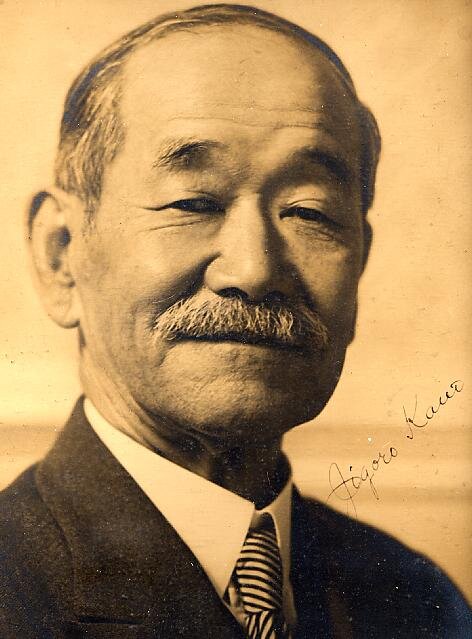
    Jigoro Kano, Creator of Judo, and man of peace

    , often translated as effortless action or action without forcing, resonates with the E-Cent invitation to stop fighting our feelings and to let them move through us. I have created a process called one-conditional acceptance of self and others; and that one condition is this: I will accept myself and you exactly the way we are, provided we are both striving to be good, moral individuals. But it seems to me that Taoism is an amoral system which often rails against social conventions.

  • But good, moral social conventions are essential for a stable and well-functioning society. For this reason, I have migrated from Taoism towards Confucianism over the years; partly as a result of my journal writing about the Judo training I did in my youth, and Prof Jigoro Kano’s promotion of the qualities of the Confucian Gentleman!
  • Taoism sees the person as part of an interconnected field of events, not as an isolated mind. E-Cent likewise sees the individual as a whole mind-body-environment system.
  • Opposites in balance. The yin–yang image of complementary opposites could offer a helpful way of talking about the splits I often work with in chairwork: Parent and Child, control and spontaneity, doing and being. And this links to the Middle Way of Buddhism; and the Golden Mean of Aristotelian ethics.
  • Trust in the organism. The Taoist faith in natural wisdom echoes my own conviction that emotional experience carries information that we ignore at our peril. And, in my experience of recovering from my own childhood developmental trauma, I have been amazed at the degree to which parts of me which were apparently crushed in childhood, have been found, and resuscitated, adding depth and breadth, and a new-found spontaneity to my character and personality.
Some of Confucius’s rules are dated, but we still need a set of social rules to live by

A word more on that migration from Taoism towards Confucianism. As a young man I trained in Judo, and I later wrote about that training in my journals. In that writing I kept returning to Professor Jigoro Kano’s promotion of the qualities of the Confucian Gentleman: a person who combines self-development with good character, moral conduct and a sense of responsibility to others. That ideal fits well with my one-conditional acceptance, which welcomes people as they are, provided they are striving to be good and moral. It also fits E-Cent’s aim of helping people to improve their own lives in socially responsible ways, which is something I find that Taoism, on its own, does not give me.

Where I would remain cautious is in importing a philosophy wholesale. Taoism is a spiritual and cultural tradition (which is also amoral), and E-Cent is a practical, evidence-informed therapy and education/training system for improving the quality of individual lives, in socially responsible and moral ways. I would want to borrow metaphors and practices that fit, such as slowing down, non-forcing and attending to what is, without claiming more than I can justify. So my provisional answer is: partly. Taoism could add a richer language for acceptance and flow, though not a new foundation. Having said that, I am not entirely in agreement with an individual accepting what is so in a way which could become quietism, or victimhood. I like the Dialectical Behaviour Therapy approach of Radical Acceptance, which has two parts: First I accept the difficult or painful things that happen to me; then I ask myself, one moment later: Which aspects of this situation might be amenable to Change? And I then try to change the things I can! In this sense, I claim a degree of Agency in the world – There are some things I can control, and some things which are beyond my control – and I try to help my mentees/clients to seek out their own access to a degree of Personal Agency. This swims against the current of Taoism!

~~~

Should Taoism and Gestalt influence Western perceptions of CBT?

Cognitive Behavioural Therapy (CBT) is, in much of the West, the dominant form of psychological therapy. At its best it is practical and helpful. But its core stance is often one of challenging, correcting and managing unhelpful thoughts, and that can come across as another form of inner control.

Taoism and Gestalt offer a different emphasis:

  • Awareness before change. Gestalt’s paradoxical theory of change holds that change tends to follow from fully accepting what is, rather than from striving to be different.
  • Following rather than forcing. The Taoist stance of non-forcing suggests that therapists can work with a client’s existing energy, instead of pushing against it.
  • The whole person. Both traditions attend to body, feeling, relationship and context, not only to thoughts.

It is worth noting that CBT has already moved some way in this direction, through the “third wave” approaches that emphasise mindfulness and acceptance, such as Dialectical Behaviour Therapy with its Radical Acceptance. Many of those ideas have roots in Eastern traditions, so the conversation is already under way.

My view is that Taoism and Gestalt should influence Western perceptions of CBT, as a corrective to over-control and over-rationalism, though not as a replacement for the strengths of CBT. But I would add two cautions, drawn from my own reflections above. First, acceptance without agency can slide into quietism or victimhood, so acceptance of what is should be followed by the question: which aspects of this situation can I change? Second, Taoism is an amoral system, so any Western therapy that borrows from it needs to keep its own moral and social grounding. A more flexible, emotion-friendly CBT, which accepts what cannot be changed and acts on what can, would, I suspect, serve many clients better.

~~~

Summary conclusions

So, what do I conclude?

  1. The Chinese interest in The Tao of Gestalt is not surprising, since Gestalt therapy has drawn on Taoism and other Eastern thought from its earliest days, and the conference marks a welcome return to those roots.
  2. It may also signal a wider opening of Chinese culture to Western therapeutic ideas, and a valuable two-way exchange.
  3. Taoism could enrich E-Cent therapy with a language of flow, wholeness and balance, provided I borrow selectively; but it cannot be its foundation, because Taoism is amoral and can encourage quietism, which is why I have migrated towards Confucian ideas and towards acceptance combined with personal agency.
  4. Taoism and Gestalt can help Western CBT to become less controlling and more emotionally attuned, provided that acceptance is paired with agency, and that moral and social values are not lost.

I wish Abi Shi and the conference organisers every success, and I look forward to learning from what emerges.

~~~

That’s all for today.

Jim Byrne

Doctor of Counselling and Life Improvement Mentor
The LIM Mentoring Consultancy

~~~