Blog Post – 29th November 2026
~~~
Trust in the Organism? Why Society Is More Powerful than Our Genes or Innate Urges (Part 1)
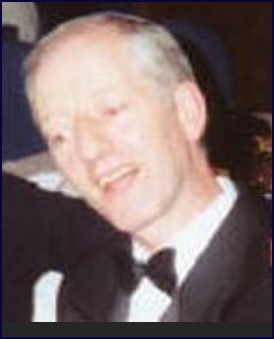
By Jim Byrne, Doctor of Counselling and Life Improvement Mentor
The Life Improvement Mentoring Consultancy
Hebden Bridge and Worldwide
29th November 2026
~~~
Summary
In yesterday’s post on The Tao of Gestalt, I listed “trust in the organism” as a point of contact between Taoism and my E-Cent approach. On reflection, that phrase is a two-edged sword. If it is taken to mean that we can trust our spontaneous impulses regardless of our socialisation, it ignores the fact that each of us carries a Bad Wolf as well as a Good Wolf. In this first of two posts, I draw on Chapter 1 of my book, Who Are You, and Where Are You Going?, to argue that the human individual is a social product, and that society is more powerful than our genes or innate urges. In Part 2, I will look at what that means for helping people to recover from childhood distortions.
~~~
Introduction
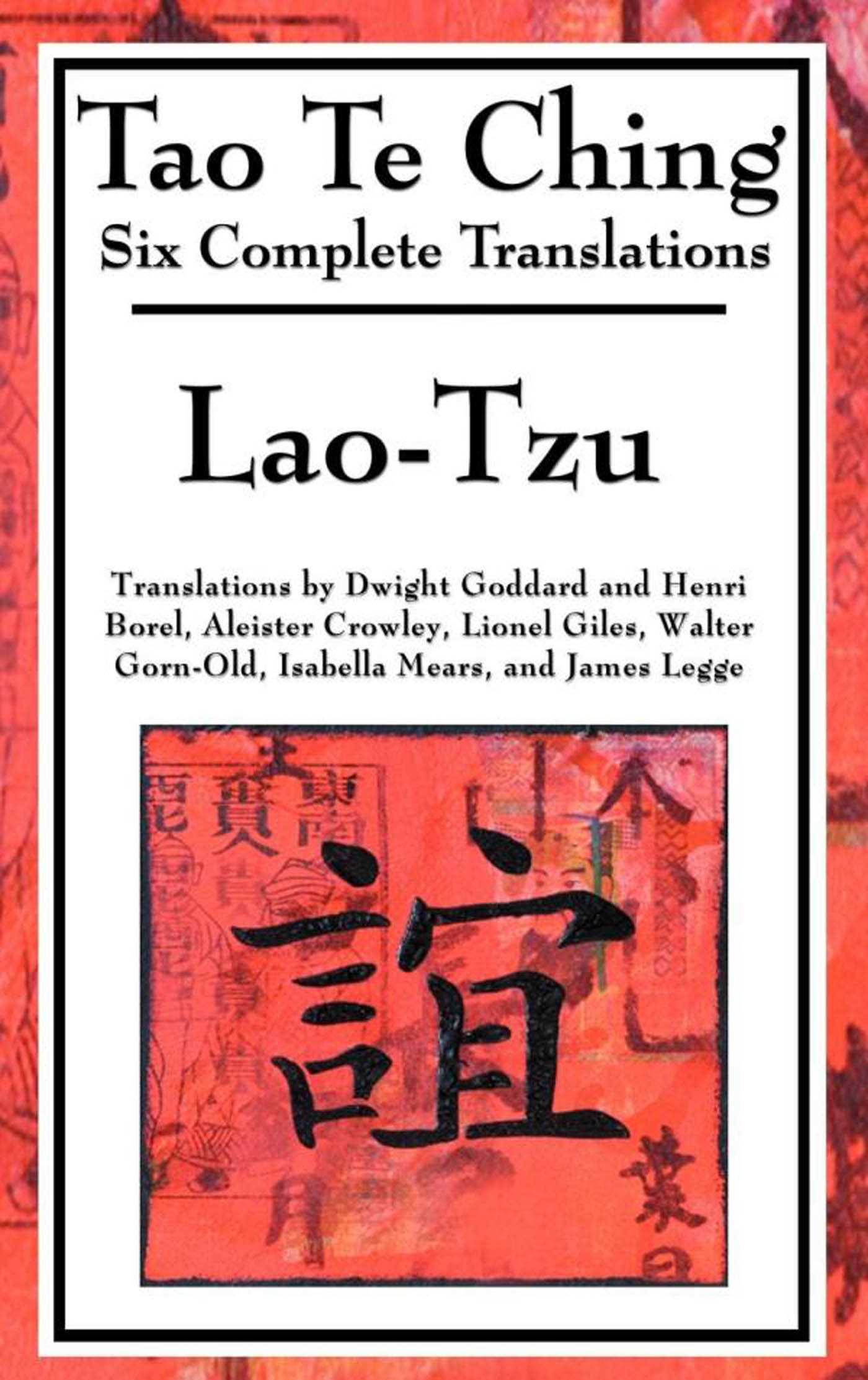 Yesterday I wrote that the Taoist faith in natural wisdom echoes my conviction that emotional experience carries information that we ignore at our peril. I still believe that. But I have been thinking about how easily the idea of “trusting the organism” can be misread.
Taoism is an amoral system. If I combine it with an uncritical celebration of “spontaneity”, I could conclude that I may trust whatever arises in me, regardless of my socialisation, and regardless of the fact that I contain a Bad Wolf as well as a Good Wolf. That would be a disastrous way to live in a community, or in any close human relationship.
So, today, I want to contrast the Taoist image of the individual with the image of the individual that I developed in Chapter 1 of my book. Here are the questions I want to look at:
- Who or what is a human individual?
- What do we bring with us at birth?
- Why is society more powerful than our genes or innate urges?
- What follows for the idea of “trust in the organism”?
~~~
Who or what is a human individual?
In Chapter 1, I begin by waking the reader up to a problem: you think you know who you are, but you probably do not have an accurate view of who or what you are. Your name, age, gender, marital status, accomplishments and work role are all labels that other people share. None of them is you.
I then worked my way towards a provisional answer, via a Zen Koan, “Who am I?”, and a good deal of reading in psychology and philosophy. My answer was that I am a physical/emotional organism, with all of its cumulative, interpretative experiences of self and social environment, including internalised representations of good and bad aspects of significant others, stored in long-term memory, below the level of conscious awareness, and permanently beyond direct conscious inspection.
The important point for today is that the “social” is built into that definition from the start. I am not a separate, self-contained entity. I carry many others inside my head, and my sense of self develops in lockstep with my sense of society, and with my biological development.
~~~
What do we bring with us at birth?
I do not deny that we bring something with us. The baby arrives with innate emotional templates and temperamental predispositions, and is “hardwired for relationship”. Lewis, Amini and Lannon (2001) describe the “limbic resonance” through which mother and baby regulate each other, and Bowlby argued that proximity to the mother is an inborn need.
But the baby has virtually none of the concepts or frames it needs to make sense of its own existence. As Hofstadter puts it, a baby has a fantastic potential to build up a repertoire of symbols, but at birth none of that potential has been realised. Freud, Klein, Fairbairn and others each captured part of the picture; but I came to see that “individual humans” are both biological and psychological, and begin their lives as totally dependent social products.
~~~
Why society is more powerful than genes or innate urges
Here are the strands of evidence and argument from Chapter 1 that lead me to that conclusion:
- Colonisation by the mother. The mother has no real choice but to “colonise” the helpless newborn. She runs its life for it, and introduces it to her language, her rules and her culture. The basis of the superego is therefore present from the beginning, and the ego develops in the dialectical space between mother and baby.
- Mirroring and internalisation. A baby develops a sense of itself through the “mirror” of other people’s responses (Armstrong, 2003). Over time, the baby internalises representations of its mother, and later of its father, siblings, peers and teachers. At the core of self-identity is the identity of the mother.
- The earliest experiences are the most tenacious. Early emotional experiences are stored non-consciously as patterns that guide all later interpretation and action. As Gerhardt (2004) says, we are not aware of our own assumptions, but they are there.
- Language is the water we swim in. Social conditioning goes on through “languaging”. Alan Watts reminds us that the task of education is to make children fit to live in a society by persuading them to accept its codes. Even our sense of being a separate individual is a cultural convention of Western societies.
- The adult is mostly non-conscious. I am about 95% non-conscious (Bargh and Chartrand, 1999), and what I take to be my “free” choices are largely made by the “guy in the basement”: the accumulated store of internalised social experience, classified in Transactional Analysis terms as Parent, Adult and Child ego states.
- Morality is situational as well as innate. Zimbardo’s (2007) review of Milgram’s experiments, the Stanford Prison Experiment and Abu Ghraib suggests that ordinary people can be quickly pressured into acting from their “evil side” unless they have strong commitments to resist.
I would not claim that genes and innate urges do nothing. The Good Wolf and the Bad Wolf are both innate, and both are found in human culture. But the proportions in which they show up in each of us are highly variable, depending on moral education, family experience and situational pressures. In that sense, society decides which wolf is fed.
~~~
What follows for “trust in the organism”?
This brings me back to the Taoist phrase. If “the organism” means the emotional, embodied individual, then I agree that our feelings carry information we should not ignore. But that organism has been shaped by society from the first hours of life. Its spontaneous impulses include the echoes of loving and harsh Parents, adaptations and rebellions, and a Bad Wolf as well as a Good Wolf.
Spontaneity, then, is not automatically wise. A spontaneous response may come from my Free Child, or from my Adapted or Rebellious Child; or from an internalised Critical Parent. I cannot tell which by simply trusting it. This is another reason why I have moved over the years from Taoism towards Confucianism, with its emphasis on moral education and responsibility to others.
It is also why the work of counselling and therapy has to be about relationship; and especially the power of present-time relationship to heal the damage of past-time relationships.
~~~
The Confucian Gentleman and Taoist spontaneity
It may help to set two ideals side by side. The Taoist ideal, as I understand it, is of a person who flows with the natural order, acts without forcing (wu wei), and trusts spontaneity. The Confucian ideal, as I met it through Professor Jigoro Kano’s promotion of the qualities of the Confucian Gentleman, is of a person who combines self-development with good character, moral conduct and a sense of responsibility to others.
The Taoist starts from the organism and lets it unfold. The Confucian Gentleman starts from the fact that we live in communities, and asks what we owe to one another. Taoism, as I said yesterday, is an amoral system which often rails against social conventions; but good, moral social conventions are essential for a stable and well-functioning society.
From the standpoint of Chapter 1, the Confucian emphasis on moral education makes sense. If the individual is a social product, and if the proportions of Good Wolf and Bad Wolf vary with upbringing and circumstances, then education in character is not an optional extra: it is how the Good Wolf gets fed. That does not make Taoist insight worthless. Slowing down, non-forcing and attending to what is remain valuable. But I would want them practised by a person who is also striving to be good and moral, which is the one condition of my one-conditional acceptance.
~~~
Summary conclusions
- The individual is not a separate entity: we carry many others inside us, and our sense of self develops in lockstep with our sense of society.
- We are born with emotional wiring and temperamental predispositions, but with almost no concepts for making sense of life.
- The earliest social experiences, especially with our mothers, are the most tenacious and the most predictive of how we think, feel and act as adults.
- Society is therefore more powerful than our genes or innate urges, in determining who we become, and which wolf we feed.
- “Trust in the organism” must be tempered by moral education and self-awareness, or it becomes a licence for the Bad Wolf.
In Part 2, I will look at how we can help people to recover from childhood distortions, by understanding the strengths and pitfalls of their Personality Adaptations, and by building on their strengths and over-writing their pitfalls.
~~~
That’s all for today.
Jim Byrne
Doctor of Counselling


